Everything you need to know about training, qualifications, choosing the right course, building a career, and becoming a confident practitioner.
There comes a moment in some people's lives when they experience something that cannot quite be explained.
Perhaps it was lying in a sound bath and feeling emotions surface without words. Perhaps it was the deep stillness that arrived as the vibrations of a gong washed through the body. Or perhaps it was a quiet inner knowing that whispered, "I think I'm meant to do this for other people."
My guess is you are one of these people.
If you've found yourself here, wondering how to become a sound healer in the UK, you're in exactly the right place.
The path to becoming a sound healer is about far more than learning to play beautiful instruments. It is a journey of learning to hold space, understand the nervous system, develop your intuition, and cultivate the presence that allows others to feel safe enough to heal.
In this guide, I'll walk you through everything you need to know before beginning your journey, from qualifications and training to choosing the right course and building a sustainable practice.
Contents
What is a sound healer?
What does a sound healer actually do?
Can anyone become a sound healer?
Do you need qualifications?
How do you choose the right training?
What instruments will you learn?
How long does training take?
Can you earn a living?
Common mistakes to avoid
Frequently asked questions

What is a sound healer?
Despite the growing popularity of sound healing, there is still a great deal of misunderstanding around what the role actually involves.
A sound healer is someone who uses carefully selected frequencies, vibration and therapeutic presence to support physical, emotional and energetic wellbeing.
Sessions may include instruments such as:
Crystal singing bowls
Himalayan singing bowls
Gongs
Chimes
Tuning forks
Your voice
Drum
Monochord
Shruti box
However, the instruments themselves are only tools.
The true work lies in the practitioner.
An exceptional sound healer understands not only how to create beautiful sounds, but how to read a room, regulate their own nervous system, adapt to individual needs and create an environment in which healing becomes possible.
This is one of the biggest misconceptions in the industry—that learning instruments automatically makes someone a healer.
It doesn't.
The instruments are the vocabulary.
You are the language.
What does a sound healer actually do?
There are many different ways to work as a sound practitioner.
You might choose to offer:
Group sound baths
One-to-one therapeutic sound healing sessions
Corporate wellbeing experiences
Retreat facilitation
Yoga and sound classes
Women's circles
Festivals and events
Womb healing
Post-partum support
Private ceremonies
Training and mentoring
Many practitioners combine several of these, creating a career that reflects both their passions and their lifestyle.
Can anyone become a sound healer?
This is one of the questions I'm asked most often.
The short answer is yes.
You do not need to be a musician.
You do not need a healthcare background.
You do not need years of meditation experience.
What you do need is curiosity, compassion and a genuine desire to support others.
Some of the most gifted practitioners I've met came from completely different careers—teachers, nurses, lawyers, artists, business owners, yoga teachers and parents returning to work after raising children.
What unites them is not their previous experience.
It's their willingness to continue growing themselves.
Do you need a qualification to become a sound healer in the UK?
One of the most common questions I hear is whether you need a qualification to practise as a sound healer.
The legal answer is nuanced.
Sound healing is not currently a regulated profession in the UK, which means there is no legal requirement for practitioners to hold a government-issued licence or specific qualification before offering sessions.
However, that should never be mistaken for meaning that accredited training isn't necessary.
If you intend to practise professionally, work with members of the public, or charge for your services, obtaining a recognised certification is strongly recommended—and, in many cases, essential. Most professional insurers require you to have completed a recognised training course before they will provide public liability and professional indemnity insurance. Without appropriate insurance, you could be putting both yourself and your clients at unnecessary risk and when working at most spaces like treatment facilities or studios, you will be required to have insurance.
When choosing a course, look for one that is accredited by a recognised professional body, such as the Complementary Medical Association (CMA) or the International Practitioners of Holistic Medicine (IPHM). Accreditation provides reassurance that the course has been independently reviewed against recognised standards and can help support your ability to obtain insurance and practise professionally.
Just as importantly, consider who is teaching the course.
A certificate is only one part of your education. The quality of the teacher, the depth of the curriculum, and the level of mentorship you receive will shape the kind of practitioner you become.
Sound healing is a profound modality that works with the nervous system, emotional wellbeing and, often, people at their most vulnerable. While sound is generally considered a gentle and supportive practice, practitioners should understand contraindications, recognise when to adapt or avoid certain approaches, know how to hold space safely, and understand the boundaries of their professional role.
Learning from an experienced, accredited teacher gives you far more than a certificate. It provides the knowledge, practical experience, ethical foundation and ongoing support needed to practise with confidence, integrity and care.
Ultimately, your goal should never be to simply gain a qualification.
Your goal should be to become a practitioner who people can trust—someone who is equipped to support others safely, compassionately and professionally.
How do you choose the right sound healing course?
This is probably the most important decision you'll make.
Rather than asking:
"How many instruments will I learn?"
Ask:
"Who will I become through this training?"
The best courses don't simply fill your notebook.
They transform your confidence.
When comparing courses, consider:
✔ Is there in-person practical experience?
✔ Will you receive feedback?
✔ Is there mentoring and ongoing after graduation?
✔ Will you practise with real people?
✔ Does the teacher actively work as a practitioner?
✔ Is there a supportive community?
Remember, you're not just buying information.
You're investing in the person you will become.
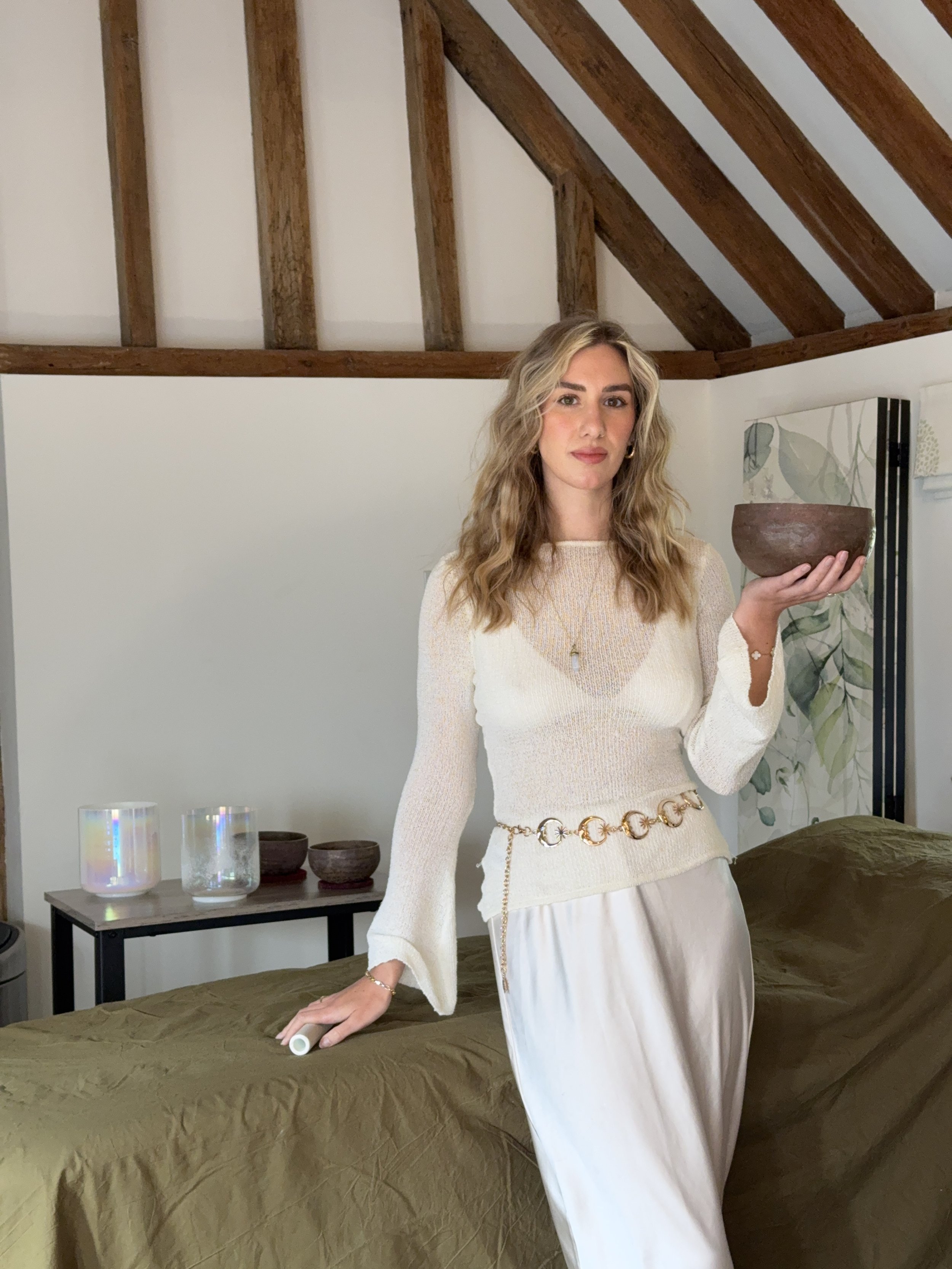
What instruments will you learn?
This varies depending on the training provider.
Many courses teach:
Crystal bowls
Himalayan bowls
Gong
Chimes
Voice
Drum
Percussion
Some specialise in therapeutic one-to-one work, while others focus primarily on facilitating group sound baths.
Think about the type of practitioner you want to become before choosing your training.
How long does it take?
There is no universal answer.
Some weekend courses provide an introduction.
More comprehensive practitioner trainings may take several months and combine online learning, practical immersion, mentorship and case studies.
The most valuable training doesn't simply fit around your diary—it gives you enough time to integrate what you're learning.
Healing cannot be rushed.
Neither can becoming an exceptional practitioner.
Can you make a living as a sound healer?
Yes—but like any profession, it requires dedication.
Many practitioners begin part-time before gradually building a full-time practice.
Income might come from:
Private clients
Group sound baths at yoga studios
Corporate wellness sessions
Retreats
Workshops
Brand collaborations
Online offerings
Teaching
Those who tend to build the most sustainable careers are the ones who continue developing both their therapeutic skills and their business knowledge.
Common mistakes new practitioners make
Believing more instruments equal better sessions
They don't.
Presence matters more than performance.
Rushing into teaching before building confidence
Experience, proper guidance and feedback creates confidence.
Confidence creates trust.
Underestimating business skills
Learning to facilitate is only half the journey.
Learning to communicate your work is equally important.
Forgetting your own healing
Your capacity to hold others expands alongside your willingness to continue your own personal growth.
Frequently Asked Questions
Is sound healing recognised in the UK?
While sound healing is not a regulated profession, many practitioners undertake professional training, gain insurance, and work within clear ethical boundaries.
Can I become a sound healer without being musical?
Absolutely. Listening, sensitivity, and presence are far more important than musical ability.
How much does sound healer training cost?
Courses vary widely depending on their depth, duration, level of mentorship, and whether they include in-person practical elements. It's worth looking beyond price alone and considering the long-term value of the education and support you'll receive.
Is online training enough?
Online learning is an excellent way to understand theory. However, many students benefit from practical, in-person experience where they can receive feedback, develop confidence, and practise holding space in real time.
Final Thoughts
There has never been greater interest in nervous system health, holistic wellbeing, and meaningful human connection.
As more people seek spaces where they can slow down, regulate, and reconnect with themselves, the need for skilled, compassionate practitioners continues to grow.
If you feel drawn towards this work, trust that curiosity.
You don't need to have everything figured out before you begin.
You simply need to take the first step into the right environment—one that supports not only your learning, but your own transformation.
Because becoming a sound healer isn't just about acquiring knowledge.
It's about becoming the kind of person others feel safe enough to heal with.
Ready to Begin Your Journey?
If you're looking for a practitioner training that blends sound healing, nervous system education, embodied practice, mentorship, and personal transformation, I'd love to welcome you into Awaken the Alchemist.
Designed as a hybrid training with flexible online learning and immersive in-person training days in Surrey, Awaken the Alchemist supports you in becoming not only a confident practitioner, but a grounded, intuitive space holder ready to share this work with integrity.
Download the course prospectus to explore the curriculum, training philosophy, and upcoming cohort, or apply now if you're ready to take the next step.